
Launching a product is a big deal. It’s the moment all those late nights, revisions, and strategy sessions finally come together.
But here’s the truth most people don’t like to admit: the way you communicate about your newly launched product is just as (if not more) important than the product itself, and even something genuinely valuable can flop if your launch emails and messaging don’t spark enough interest.
So if you’re gearing up for a launch and want your emails to actually work, you’re in the right place.
In this article, we’re breaking down a few real product launch email examples for every stage of the process, from early teaser emails to follow-ups that drive conversions after launch day. You’ll also get a simple, repeatable framework for building a high-performing product launch email sequence you can use again and again.
What Is a Product Launch Email?
A product launch email is a message sent to your target audience to announce a new product, a significant update, or new features.
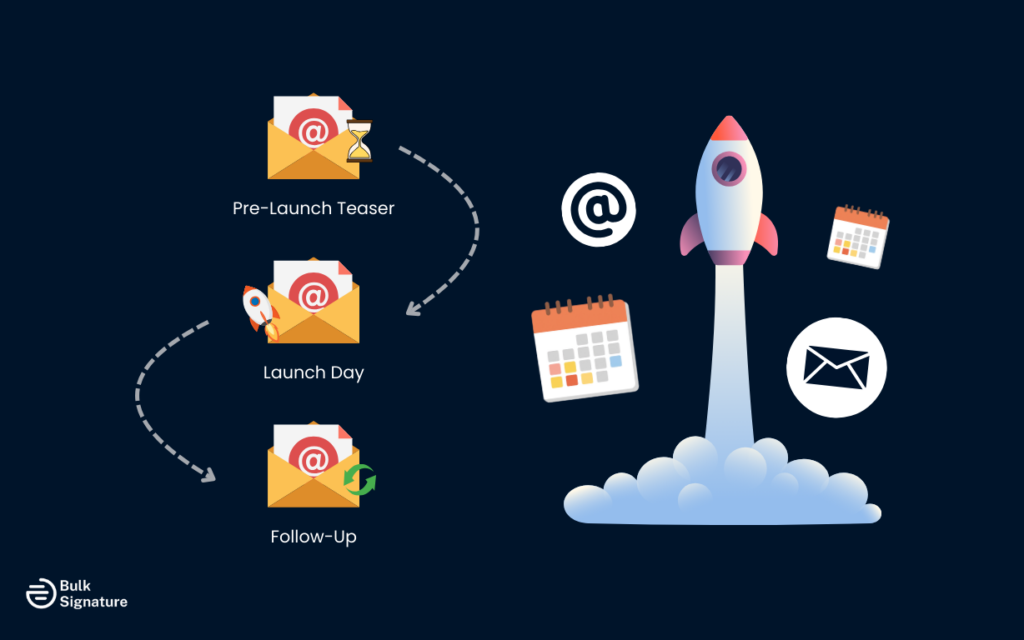
Despite the name, a product launch email is rarely just a single email. In practice, a product launch email strategy is a carefully timed sequence designed to guide your audience through the entire launch process. That typically includes:
- Pre-launch teaser emails to build anticipation.
- Launch-day announcements to reveal what’s new.
- Follow-up emails that reinforce the value and encourage customers to take action.
The primary goal isn’t simply to make an “announcement”, it’s to raise awareness of the new product and clearly communicate its value.
What Makes a Successful Product Launch Email Sequence?
A comprehensive product launch email sequence is typically composed of several distinct phases, each with a specific goal. Here’s a quick look at each phase, along with a few examples.
Product Launch Email Examples and Phases
Phase | Purpose | Email Examples |
Pre-launch Phase | To create anticipation and generate buzz around the upcoming launch. This phase is all about creating a sense of excitement and getting your audience ready for what’s to come. | Teaser emails: A sneak peek of the new product or feature, without revealing all the details. Early access invitations: Offering a select group of loyal customers or early adopters the chance to try the product before anyone else. Pre order emails: Emails that allow customers to reserve or purchase the product ahead of the official launch. Countdown emails: A series of emails counting down to the launch date, often with a countdown timer to create urgency. |
Launch Phase | To officially announce the newly launched product and drive immediate action. This is the main event of your product launch campaign. | The direct announcement: A clear and concise email that announces the product is now live. The problem/solution email: An email that focuses on the specific pain points your product solves for your target audience. The social proof email: An email that includes customer testimonials or case studies from beta test users. |
Post-launch Phase | To maintain momentum, gather feedback, and drive long-term engagement and sales. This phase is all about reinforcing value and re-engaging anyone who didn’t take action during the initial launch window. | The “thank you” email: A message to thank early adopters and previous customers for their support. The feature adoption email: An email that highlights specific new features and explains how the feature works. Follow-up emails: A message sent to those who haven’t yet engaged with the launch, often with a special offer or a bit more context on what your product can do and why it matters. |
Crafting Compelling Product Launch Emails: Best Practices
Now that we’ve looked at the different types of emails in a product launch email sequence, let’s focus on the content of the emails themselves.
The following table outlines some best practices to keep in mind when putting together your email marketing copy.
6 Best Practices for Writing Compelling Product Launch Emails
Best Practice | Why It Matters | How to Apply It |
Write a catchy subject line | Your subject line plays a massive role in whether or not your email gets opened or ignored, with strong subject lines dramatically increasing open rates. | Keep it short, snappy, and curiosity-driven. Be as personalized and specific as possible. A/B test different versions to see what resonates the most with your specific audience. |
Clearly articulate your value proposition | Readers need to quickly understand why your product matters and what makes it worth their attention. | Focus on how users benefit, rather than listing features. Highlight a specific pain point your product solves. Use clear, simple language. |
Include a clear call to action (CTA) | Your audience should know exactly what to do after reading your email. | Use action-oriented language. Make your CTA visually prominent throughout the email. Make sure it clearly aligns with the email’s message. |
Use social proof to build trust | Social proof builds your credibility and can often help tip the scales in your favor when someone feels unsure. | Include customer quotes or links to relevant blog posts or case studies. Share data on how many people are already using the product. Include links to any social media profiles to give subscribers additional ways to explore your brand. |
Segment your audience for better results | Different users have different needs. Segmentation allows you to create messages that are more relevant and effective for different groups. | Try segmenting multiple audiences by behavior, purchases, or engagement. Create personalized messaging and visuals for each group. |
Test across different email clients | Emails can break or display poorly depending on the device or inbox, which can have a negative impact on conversions. | Test your emails in Gmail, Outlook, and Apple Mail. Make sure to check both mobile and desktop views. Use responsive and accessible email design practices. |
Common Mistakes to Avoid in Your Product Launch Email Templates and Campaigns
Even with the best intentions, it’s easy to make mistakes when planning and executing a product launch email campaign. Here are some of the most common pitfalls to watch out for, and how to avoid them.
Focusing Too Much on Features Instead of Benefits
Your target audience doesn’t care about the technical specifications of your product. They care about how it will solve their problems or make their lives easier. When writing your marketing copy, always lead with the benefit, then support it with the feature that makes it possible.
Neglecting the Post-Launch Phase
Many organizations put all their energy into the pre-launch and launch phases, then drop the ball once the product is live. However, the post-launch phase is critical for maintaining momentum and encouraging feature adoption.
Consider sending a series of follow-up emails that highlight different aspects of your product. For example, you might send one email that focuses on a specific use case, another that shares customer testimonials, and a third that provides tips for getting the most out of the newly launched product. This approach keeps your product top-of-mind without feeling repetitive.
Sending Too Many Emails Too Quickly
While it’s important to maintain momentum during a product launch, there’s a fine line between getting the word out and overwhelming your audience. Sending too many emails in a short period can lead to unsubscribes and damage your sender reputation. A good rule of thumb is to space your emails out over several days or weeks, depending on the length of your email sequence.
Pay attention to your email metrics, particularly your unsubscribe rate and click-through rates. If you notice a spike in unsubscribes or a drop in engagement, it might be a sign that you’re sending too many emails or that your content isn’t really connecting with your audience.
Not Having a Clear Call to Action
Every launch email should have a single, clear call to action. Trying to get your audience to do too many things at once will dilute your message and reduce your conversion rate. Decide what the primary goal of each email is, then design your call to action around that goal. If you want people to sign up for a trial, make that the focus. If you want them to pre-order, make that the primary CTA.
Your call to action should also be visually prominent and use action-oriented language. For example, phrases like “Get started today,” “Claim your spot,” or “Try it now” are more effective than passive language like “Click here” or “Learn more.”
Measuring the Success of Your Product Launch Email Campaign
Once your product launch email campaign is underway, it’s important to track your results and understand what’s working and what isn’t.
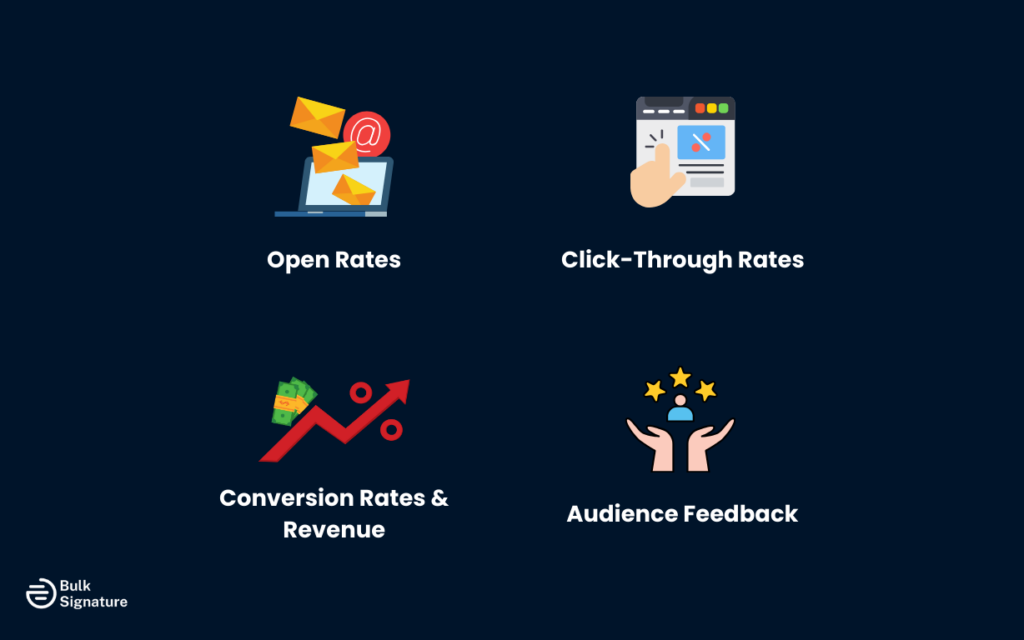
The following metrics can help you evaluate the effectiveness of your email sequence and identify opportunities for improvement.
Open Rates and Subject Line Performance
Your open rate tells you how many people are actually opening your emails. A low open rate often indicates that your email subject line isn’t compelling enough, or that your emails are getting lost in crowded inboxes.
According to HubSpot’s email marketing benchmarks, the average email open rate across industries is 42.35%. Try A/B testing different subject line options against this benchmark to see what resonates best with your target audience.
Click-Through Rates and Engagement
Your click-through rates tell you how many people are taking action after opening your email. This metric is a good indicator of how well your content is resonating with your audience and how effective your call to action is. If you have a high open rate but a low click-through rate, it might mean that your content isn’t engaging enough or that your CTA isn’t clear.
Conversion Rates and Revenue
Ultimately, the success of your product launch email campaign should be measured by how many people actually purchase your product or sign up for your service. Track your conversion rate and the revenue generated from each email in your sequence. This will help you understand which emails are most effective at driving more sales and which might need to be revised for your next launch.
Audience Feedback and Sentiment
Numbers are important, but qualitative feedback can be just as valuable. Pay attention to how your audience is responding to your emails. Are they replying with questions or positive feedback? Are they sharing your emails on social media? This kind of engagement can provide valuable insights into what’s working and what could be improved.
Consider sending a post-launch survey to gather feedback from early adopters and previous customers. Ask them what they liked about your launch email campaign, what could be improved, and what influenced their decision to purchase (or not purchase).
Taking the Next Step in Your Product Launch Strategy With BulkSignature
While a well-executed product launch email campaign is essential for a successful launch, it’s just one piece of the email marketing puzzle.
To truly maximize the impact of your next launch, you need to make sure that every email touchpoint is consistent, professional, and on-brand.
One of the most overlooked launch channels? The everyday emails your team sends to customers, prospects, and partners.
This is where a centralized email signature campaign management tool (like BulkSignature) can make a massive difference.
For example, with BulkSignature, you can:
- Standardize email signatures across your entire organization.
- Instantly update banners, CTAs, and links for new launches or feature releases.
- Make sure every outbound email stays on-brand and up to date with your latest launches.
While it’s not a traditional email marketing tool, it can help you guarantee that every email sent by your team supports the launch automatically with minimal effort and zero extra work for your team.
Ready to level up your product launch? Book a free demo with us today!
Frequently Asked Questions About Product Launch Emails
How many emails should be in a product launch email sequence?
A typical email sequence for a product launch includes between 3 and 7 emails, spread out over the pre-launch, launch, and post-launch phases. However, the optimal number of emails will depend on your specific goals and the nature of your product line. It’s more important to focus on the quality and relevance of your content than on hitting a specific number of emails.
What is the best time to send a product launch email?
The best time to send your launch email will depend on your target audience and their user behavior. It’s a good idea to analyze your existing email marketing data to see when your audience is most engaged. You can also A/B test different send times to see what works best for your product launch campaign.
What should be included in a feature announcement email?
A strong feature announcement email should include:
- A clear explanation of what’s new.
- A brief reason why the feature is useful or valuable.
- Simple instructions on how to try or enable the feature.
- A quick example or use case to make it feel practical.
- A clear call to action, such as “Try it now” or “See it in action.”
This approach keeps the email focused, easy to skim, and action-oriented, helping users understand the update quickly and actually use the feature instead of just reading about it.
What should I include in my brand’s product launch email templates?
Your product launch email templates should give you structure without locking you into a rigid format. This means allowing plenty of space to clearly explain the value of what you’re launching, while also leaving room for visuals, social proof, and a strong call to action.
Most importantly, your product launch templates should be mobile-friendly and easy to personalize, so each launch feels intentional (not copy-pasted).


